How is a PCB Assembled?
How is a PCB Assembled?
PCB Assembly (PCBA) is the process of mounting electronic components onto a bare printed circuit board (PCB) to make it functional.
PCB and Component Preparation: Ensure the PCB boards and electronic components are dry and meet production requirements.
Solder Paste Printing: Use a stencil to apply solder paste on the PCB pads. Inspect the quality of solder paste printing to ensure accuracy and consistency.
Component Placement: Use pick-and-place machines to precisely mount surface-mount devices (SMDs) onto the solder pads.
For heavy or special components, through-hole technology (THT) may be used, requiring manual insertion into pre-drilled holes.
Soldering: Pass the assembled PCB through a reflow oven, where the solder paste melts at high temperatures, forming strong electrical and mechanical connections.
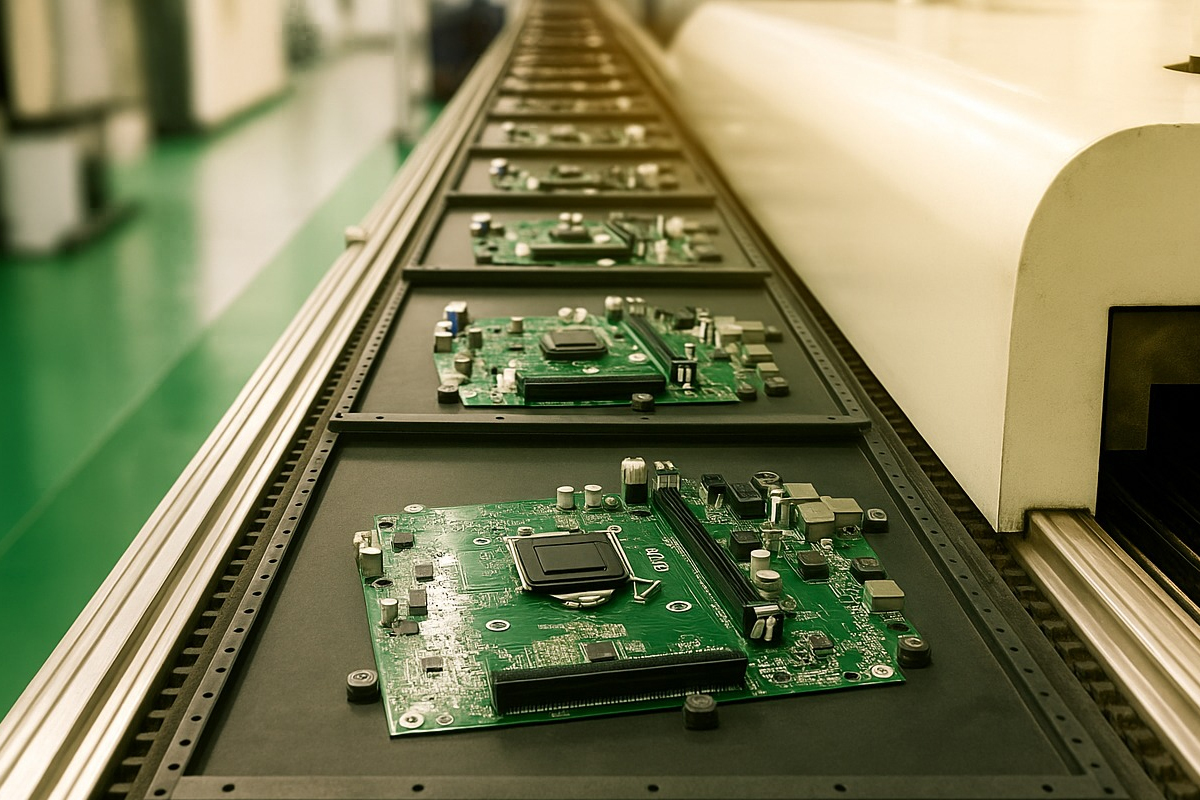
Inspection and Testing:
AOI (Automated Optical Inspection): Automatically checks soldering quality and component positioning.
X-Ray Inspection: Used for complex or hidden solder joints.
Functional Testing: Ensures the assembled PCBA meets the required design performance.
Cleaning: Clean the PCB after soldering to remove residual flux and contaminants, ensuring long-term reliability.
Final Assembly and Packaging: Integrate the tested PCBA with other components, then package it properly for safe transport and storage.
📩 Learn more about PCB assembly—contact us today!
Email:[email protected]
WhatsApp:+86 198 7541 7423